A portfolio business where the portfolio was the hardest thing to see
The client
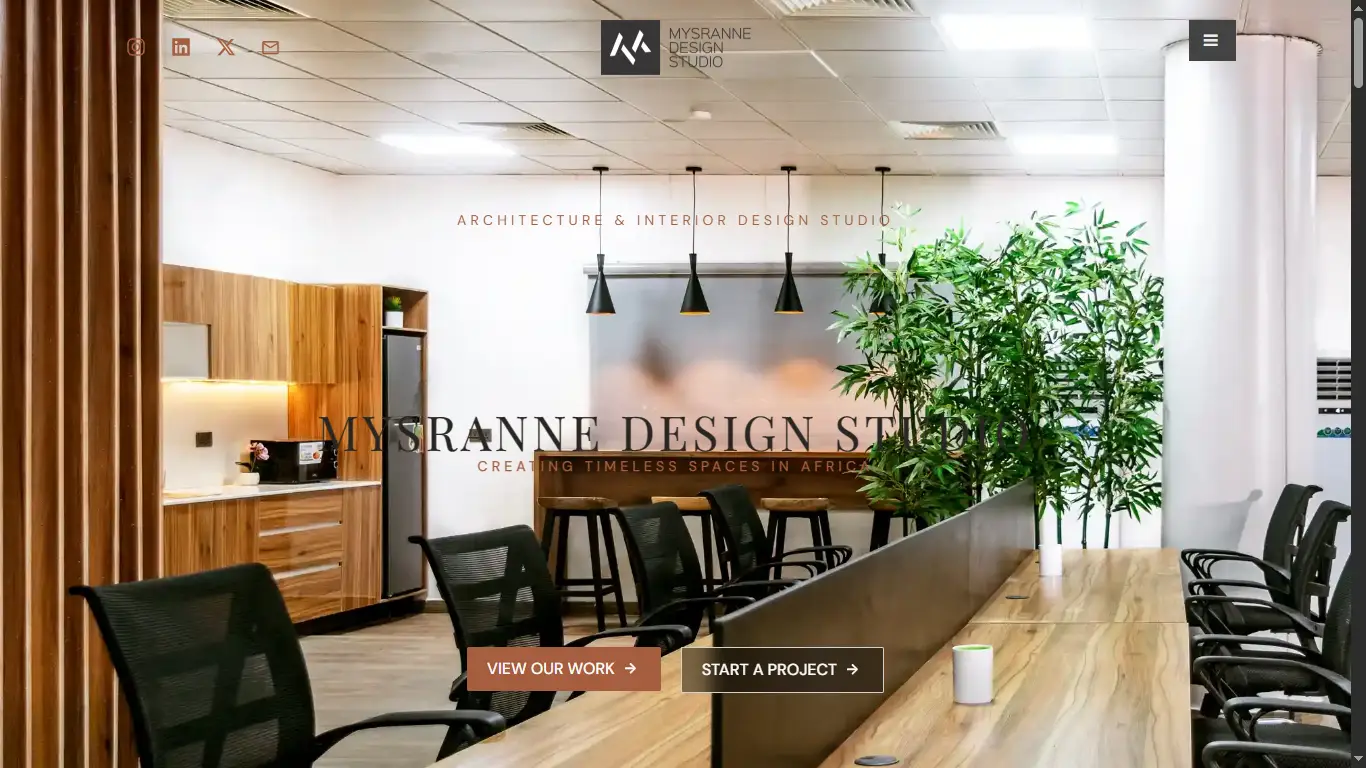
Mysranne Design Studio is a Lagos based interior architecture practice working across both residential and commercial projects, from private residences in Ikoyi and Lekki to studios and corporate spaces. Their work is the entire sell. Online it had been reduced to a grid of small, slow loading thumbnails.
The brief
A practice whose product is visual, presented in a way that made the product almost impossible to look at. On top of that, enquiries arrived through a generic contact form with no useful detail in them, so every single one needed a round of messages just to work out whether it was a real project and whether it was worth a meeting.
What we did
- Gave the work the full width of the screen. Large images that load properly, with projects presented as projects rather than as a gallery wall of thumbnails.
- Rebuilt the enquiry step as a brief. Instead of name, email and message, the form asks about the scope, the space, the timeline and the budget, which are the things that tell a studio whether to take the call.
- Search work so the practice is found for interior architecture and interior design in its market.
The result
Enquiries now arrive carrying enough information for the studio to know, before the first conversation, what kind of project it is. We do not have a number on how much that has changed the volume, and we would rather say so than invent one. What changed is the quality of what lands, not the count.
Why the form was the important part
The obvious job was making the work look the way it deserves to, and that part is straightforward once somebody decides the images matter more than the layout around them. The less obvious job was the enquiry form.
A generic contact form is polite and useless. It produces a name, an email address and a sentence, which tells a studio nothing about whether this is a bathroom refresh or a four bedroom house, whether it is happening this year, or whether the person has any idea what it costs. Every one of those enquiries then needs three messages before anybody knows whether to care. Asking those questions on the form instead moves the work to the person who already has the answers.